The Complete Seasonal Home Maintenance Guide for DFW Homeowners
Protect your Plano-area home year-round with a thorough seasonal checklist tuned specifically for North Texas weather, soil, and housing stock.
Why home maintenance in North Texas requires a specific approach
Home maintenance is not one-size-fits-all. The specific maintenance needs of a home in Plano, Texas are materially different from those of a comparable home in Denver, Boston, or Portland — and homeowners who apply generic maintenance advice without accounting for North Texas climate, soil conditions, and construction norms often find themselves dealing with preventable damage.
The primary factors that shape a DFW home maintenance program: expansive clay soil (the primary cause of foundation movement and cracking in the region), an extreme temperature range (single-digit freezes in winter, 100°+ summers), a severe storm season (March through June), high summer humidity (leading to moisture and mold risks), and a housing stock that skews heavily toward slab-on-grade construction with specific maintenance implications.
This guide is organized by season and reflects what we see as a property restoration and remodeling contractor working throughout Plano, Frisco, Allen, McKinney, Garland, Richardson, Carrollton, and surrounding communities. The most expensive repairs we encounter in the DFW area are almost always the result of deferred maintenance — things that could have been prevented for $50 in caulk or an hour with a garden hose. If the damage has already happened, read our water damage emergency guide immediately.
Spring maintenance: storm prep and post-winter inspection
Spring in North Texas arrives fast and brings real weather risk: severe thunderstorms, hail, high winds, and the occasional tornado. The period from late February through June is the single most important time for exterior home inspection and preparation.
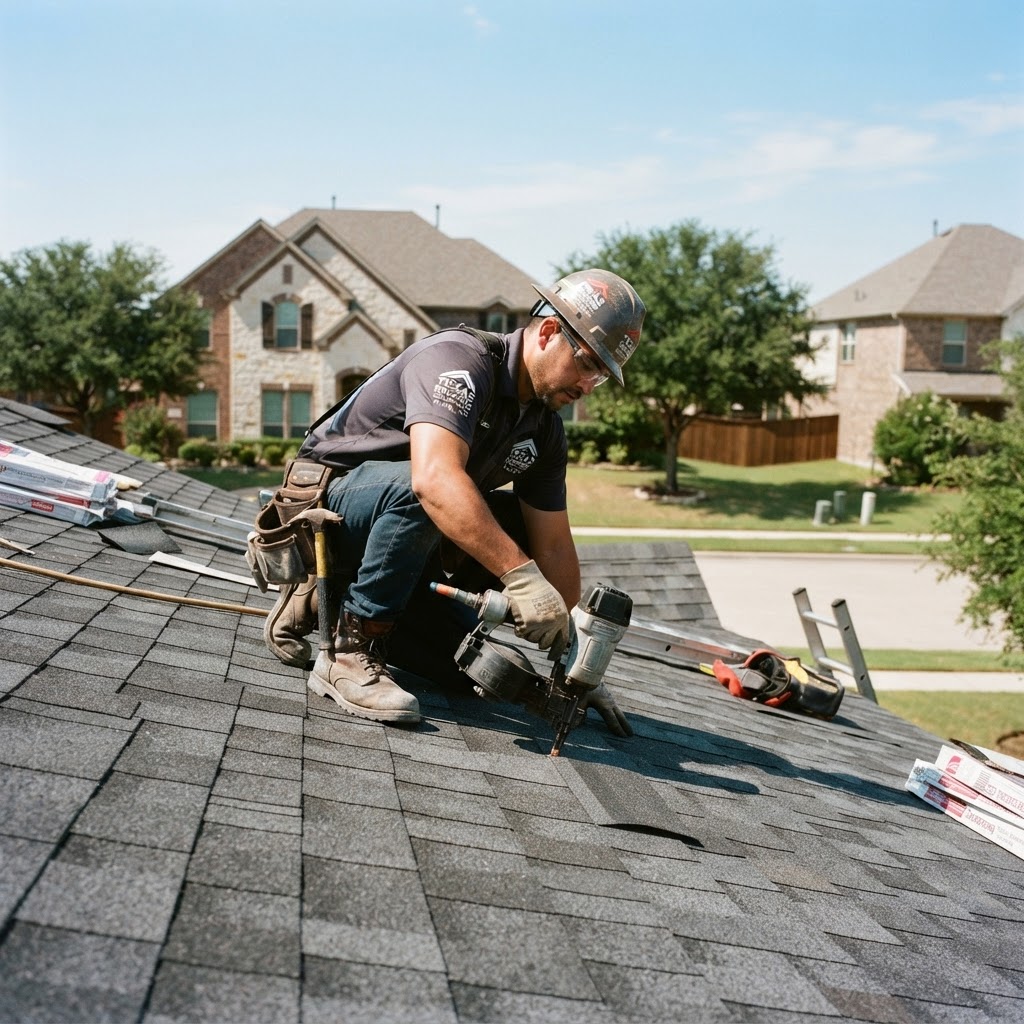
Roof inspection: After any winter with ice, begin spring with a roof inspection — either from the ground with binoculars or from a ladder to the eave line. Look for missing or damaged shingles, lifted flashing around chimneys and vents, and debris accumulation in valleys. In the DFW area, most residential roofs are 3-tab or architectural asphalt shingles with a 20–30 year lifespan — if yours is approaching or past that range, a spring pre-season inspection by a licensed roofing contractor is worth the $150–$300 investment. Storm damage may qualify for property restoration through your homeowner's insurance.
Gutter cleaning and downspout extension: Clean gutters before spring rains arrive, and check that downspouts are directing water at least 6 feet from the foundation. In North Texas's clay soil environment, water pooling near the foundation is a direct cause of the differential foundation settlement that creates cracks in drywall, sticking doors, and sloping floors.
Window and door caulking: Inspect all exterior window and door perimeters for caulk failures — this is particularly common on south and west-facing exposures where UV exposure is highest. Failed caulk allows water intrusion during driving rains, which in DFW can be intense. Replacing failed caulk is a simple DIY task with $10 in materials; the damage from ignoring it can cost thousands.
HVAC service: Before the first 90° day, service your HVAC system — change the filter, clean condenser coils, and have a technician check refrigerant levels and airflow.
Summer maintenance: foundation watering and heat management
Summer in North Texas — specifically the July through September dry period — is the most dangerous season for your home's foundation. DFW's expansive clay soil shrinks dramatically when it dries out, which causes the soil beneath and adjacent to the slab to pull away from the foundation. This differential movement — more pronounced at the perimeter than in the center — is the primary cause of the foundation settlement cracks that affect thousands of Plano-area homes.
Foundation watering: The most effective and least expensive way to mitigate this risk is systematic foundation watering during dry periods. A soaker hose or drip system placed 12–18 inches from the foundation perimeter, running 30–45 minutes daily during periods without significant rainfall, maintains consistent soil moisture and dramatically reduces the movement differential that causes cracking. This is genuinely effective as a preventive measure for homes in good structural condition.
Attic inspection: In North Texas summers, attic temperatures can reach 150°F+. This extreme heat accelerates shingle degradation from the inside, stresses roof structure, and dramatically increases cooling costs. Summer is a good time to verify attic insulation levels (Plano building code recommends R-38 minimum for existing homes) and ensure attic ventilation is functioning correctly. Blocked soffit vents — often caused by insulation that's been blown over them — are a common and fixable source of attic overheating.
Air sealing: Summer cooling bills in DFW homes are often higher than they need to be not because of HVAC inefficiency but because of air leakage — uncaulked penetrations in the ceiling plane, gaps around recessed lights, unsealed attic access panels. Adding weatherstripping and caulk at these locations is a Saturday DIY project that pays for itself in reduced utility bills within a season.
Fall maintenance: the mechanical tune-up window
Fall — specifically October and November — is the optimal window for home maintenance in North Texas. Storm season is largely past, freezes haven't arrived yet, and the moderate temperatures make exterior work pleasant. This is the window to complete everything that should be in good condition before winter.
Furnace service: Have your heating system professionally serviced before the first cold front. Replace the filter, have the heat exchanger inspected for cracks (a cracked heat exchanger allows combustion gases including carbon monoxide into the living space — this is a safety issue, not just a comfort issue), and test the igniter and thermocouple. In DFW's increasingly cold winters, a furnace failure in December is an emergency; the same failure discovered in October is a scheduled repair.
Water heater inspection: Check the temperature and pressure relief valve, inspect the anode rod if the unit is more than 5 years old, and check the base and connections for any signs of moisture or corrosion. Most Plano homeowners replace water heaters when they fail — this reactive approach means dealing with the flood of a failed unit. Inspecting annually and replacing proactively at 10–12 years is the better approach. If a water heater failure causes water damage, read our water damage guide immediately.
Smoke and CO detector testing: Replace batteries in all smoke and carbon monoxide detectors, test each unit, and verify placement. CO detectors should be installed in any home with gas appliances or an attached garage — which covers the vast majority of Plano homes.
Winter maintenance: pipe protection and freeze preparedness
North Texas homeowners received a severe reminder of the consequences of inadequate freeze preparedness in February 2021. The winter storm that affected the region — leaving millions without power and causing catastrophic pipe failures across the DFW area — was an extreme event, but it exposed the vulnerability of a housing stock that had been built for a historically mild climate.
Pipe protection: In Plano and the surrounding cities, the pipes most vulnerable to freezing are those in exterior walls (particularly north-facing walls), pipes in unheated garage spaces (water heater pipes and hose bibs are common victims), and pipes in unconditioned attic spaces. Insulating these pipes with foam pipe insulation sleeves ($1–$3 per linear foot at any hardware store) is a simple, permanent precaution. During a hard freeze (sustained temperatures below 20°F), supplement insulation by dripping faucets connected to at-risk supply lines and opening cabinet doors under exterior-wall sinks.
Know your shutoff: Every adult in the household should know where the main water shutoff is located and how to close it. In the event of a pipe burst, closing the main quickly is the most important damage-limiting action you can take. If pipes do burst, read our water damage emergency guide immediately.
Hose bibs: Disconnect garden hoses from exterior hose bibs before the first freeze. Water left in a hose traps it against the bib and prevents it from draining — this is the most common cause of hose bib freeze damage, and it's entirely preventable. For added protection, install foam hose bib covers on all exterior spigots before December.
Fireplace and chimney: If you use a wood-burning or gas fireplace, have the chimney inspected and cleaned annually. Creosote buildup in wood-burning fireplaces is a fire hazard; blocked gas fireplace flues can allow combustion gases back into the living space. A chimney sweep inspection runs $100–$200 — a worthwhile annual investment for any home with an active fireplace. And if you're ready to upgrade a room after completing your maintenance list, our whole-home remodeling services cover everything from kitchens to flooring.